
How AI Search Is Changing Pest Control Marketing
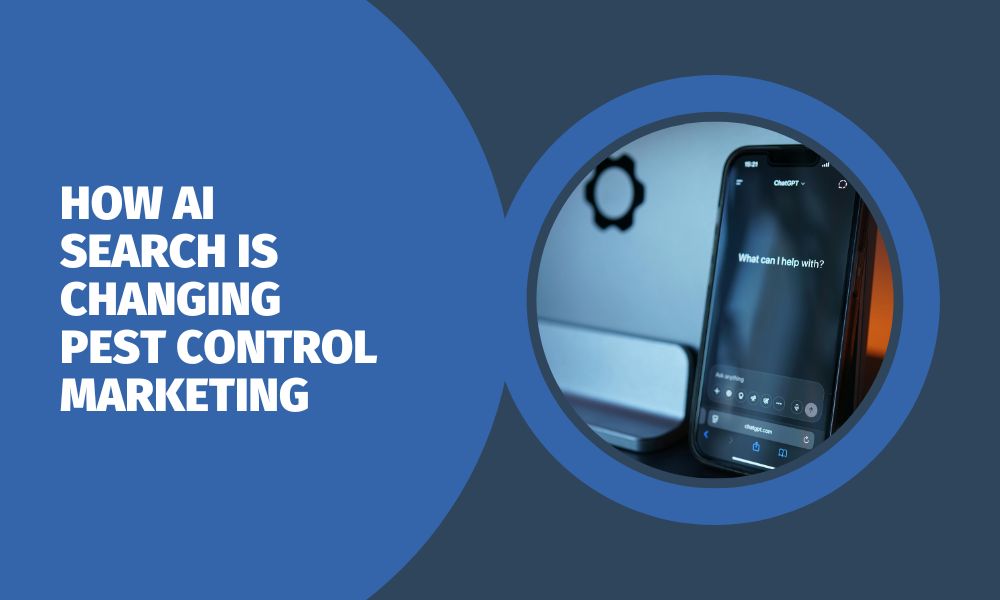
Search Is Changing Faster Than Most Pest Control Companies Realize For years, pest control marketing followed a relatively familiar formula. Companies invested in SEO to improve rankings, ran Google Ads to generate leads, and focused on appearing as high as possible in traditional search results. The goal was simple: show up when homeowners searched for a pest problem. That still matters. What is changing is how search engines now present information—and how homeowners interact with it. AI-driven search experiences, including Google’s AI overviews and platforms like ChatGPT, are beginning to reshape how people research pest issues, compare companies, and make decisions. Instead of simply scrolling through a list of websites, users are increasingly being shown summarized answers before they ever click through to a page. This changes the way visibility works. And for pest control companies, it changes what effective marketing looks like moving forward. Ranking #1 Is No Longer the Only Goal Traditional rankings still matter, but they are no longer the entire picture. A homeowner searching for termite control, rodent issues, or mosquito treatments may now see an AI-generated summary at the top of search results before organic listings even appear. That summary often pulls information from multiple sources and presents it in a way that quickly answers the user’s question. This means companies are no longer competing only for rankings. They are competing to become part of the answer itself. The businesses that are most likely to appear in these AI-driven summaries are typically the ones creating: Generic pages written purely for keywords are becoming less effective in this environment. AI Search Rewards Depth and Relevance One of the biggest shifts happening right now is the move away from thin, surface-level content. For years, many companies relied on generic city pages and basic service descriptions that existed primarily to target keywords. In some cases, that was enough to rank. AI systems evaluate content differently. Instead of looking only at keyword placement, they are increasingly evaluating whether the content genuinely answers the question being asked and whether it demonstrates expertise on the topic. This is why deeper content is becoming more important. Articles that explain: Are far more valuable than generic content that says very little. The more context and insight your content provides, the more useful it becomes to both search engines and users. Local Expertise Matters More Than Ever Pest control is highly local. The problems homeowners face in Phoenix are different from the ones they deal with in New York. The buying behavior in Raleigh is different from what happens in Las Vegas or Houston. AI-driven search is increasingly recognizing these differences. This creates a major opportunity for pest control companies that build content around: Content that reflects local expertise tends to stand out because it feels more relevant and more authentic. This is one reason city-specific pest control marketing content is performing so well right now. It provides context that generic marketing articles cannot. Reviews and Reputation Are Becoming Even More Important AI search is not only evaluating website content. It is also increasingly influenced by broader trust signals across the internet. That includes: Homeowners already rely heavily on reviews when choosing a pest control company, but AI systems are also beginning to use those signals to help determine credibility and authority. Companies that consistently generate reviews, respond professionally, and showcase customer experiences across their website and content are building stronger trust signals overall. In competitive markets, this can influence both rankings and conversion. SEO Is Not Dying—It’s Evolving One of the biggest misconceptions right now is the idea that AI will replace SEO entirely. That is not what is happening. SEO is still one of the most important long-term marketing channels for pest control companies. What is changing is the type of content and structure that performs well. Old SEO strategies focused heavily on: Modern search increasingly rewards: The companies that adapt to this shift early are likely to gain a major advantage over the next several years. Your Website Needs to Support Trust and Conversion Even if AI search helps homeowners discover your business, the website still plays a critical role. Once someone lands on your site, they are evaluating: This means your website needs to do more than rank. It needs to convert. Companies that perform well in modern search environments tend to: Visibility creates opportunity. The website determines whether that opportunity turns into revenue. AI Search Will Reward Real Expertise One of the most important shifts happening right now is that AI systems are becoming better at identifying content that reflects genuine experience. This is a major advantage for companies that truly understand their market and industry. Generic content created without real insight is becoming easier to identify. On the other hand, content that reflects operational understanding, local knowledge, customer behavior, and industry-specific strategy tends to stand out. For pest control companies, this means there is growing value in creating content that goes beyond surface-level SEO. The companies that explain, educate, and provide meaningful insight are more likely to become visible within AI-driven search experiences. The Companies That Adapt Early Will Have the Advantage AI search is still evolving, but one thing is already clear: The way homeowners discover pest control companies is changing. Businesses that continue relying on outdated SEO strategies may find it harder to maintain visibility over time. Companies that adapt by creating stronger, more useful, and more experience-driven content are likely to gain an advantage. That does not mean abandoning SEO. It means approaching it differently. The focus is shifting from simply ranking pages to building authority, trust, and relevance across an entire digital presence. Take a Closer Look at How Your Content Positions Your Business If you’re investing in SEO or content marketing, it may be worth evaluating whether your current strategy aligns with where search is heading. That includes: In the coming years, the companies that win in search are likely to be the ones that create the most helpful and trustworthy experience—not
Why Speed to Lead Matters More Than Lead Volume in Pest Control
Most Pest Control Companies Don’t Have a Lead Problem One of the biggest misconceptions in pest control marketing is the belief that growth always requires more leads. In reality, many companies are already generating enough opportunities to grow. The real issue is what happens after those leads come in. Calls go unanswered. Form submissions sit too long before a response. Follow-up becomes inconsistent once technicians get busy or office staff get overwhelmed. Over time, opportunities that were already paid for through marketing are lost simply because the response process is not structured well enough. This is where the concept of speed to lead becomes critical. In pest control, the company that responds first often has a major advantage—not just because they were faster, but because they shaped the interaction before competitors had the chance. Pest Control Is an Urgency-Driven Industry Unlike many service industries, pest control decisions are often emotional and time-sensitive. When a homeowner discovers rodents in the attic, sees cockroaches in the kitchen, or gets swarmed by mosquitoes in the backyard, they are not casually browsing for options. They are actively looking for a solution. In that moment, response time matters. Many homeowners contact multiple companies at once. They may submit two or three quote forms within minutes or call several providers back-to-back. The first company that responds professionally and confidently immediately gains an advantage. That does not mean the cheapest company wins. It means the company that feels most responsive and organized often becomes the default choice. Every Minute of Delay Reduces Conversion Potential A common mistake in pest control marketing is focusing heavily on lead generation while underestimating the importance of lead handling. Companies spend thousands on SEO, Google Ads, Local Service Ads, and website development but then allow leads to sit for hours before anyone responds. The problem is that lead intent fades quickly. The longer a prospect waits, the more likely they are to: Even small delays can impact conversion rates significantly. In competitive markets especially, speed becomes part of the customer experience. A fast response signals professionalism, organization, and reliability before the first service even takes place. Missed Calls Are One of the Biggest Revenue Leaks in Pest Control For many pest control companies, the phone is still the primary conversion point. That creates a major issue when calls are missed. Most homeowners are not leaving detailed voicemails and waiting patiently for a callback. If a call goes unanswered, many immediately move on to the next company in search results. This means missed calls are not just missed conversations—they are often lost revenue. One of the simplest improvements companies can make is implementing systems around missed call response. That includes: These systems help recover opportunities that would otherwise disappear completely. Automation Creates Consistency As lead volume grows, consistency becomes harder to maintain manually. This is where automation becomes valuable—not because it replaces people, but because it supports speed and structure. Companies that perform well typically build processes that ensure every lead receives immediate acknowledgment, even if a full conversation cannot happen right away. That may include: These systems help create continuity and reduce the number of opportunities that fall through the cracks. Most importantly, they allow the business to maintain responsiveness even during busy periods. Faster Response Times Improve Marketing Performance One of the most overlooked benefits of strong lead management is that it improves the effectiveness of every other marketing channel. When conversion rates improve, existing marketing dollars produce more revenue. That means: This is important because many companies try to solve conversion problems by increasing ad spend instead of improving the process behind the leads they already generate. In many cases, improving speed to lead creates more growth than increasing lead volume. The Customer Experience Starts Before the Service Appointment Many companies think customer experience begins when the technician arrives. In reality, it begins the moment a lead reaches out. How quickly someone receives a response, how clearly communication is handled, and how organized the process feels all influence the customer’s perception of the company. A fast, professional response builds confidence immediately. A delayed or inconsistent response creates doubt before the relationship even begins. This matters even more in pest control because homeowners are often already stressed or uncomfortable about the issue they are dealing with. The company that creates reassurance early tends to stand out. Existing Leads Are Usually the Bigger Opportunity When companies focus entirely on generating more leads, they often overlook how much revenue is already sitting inside their pipeline. Unconverted estimates, old customers, inactive leads, and unfinished follow-up sequences all represent opportunities that can often be reactivated with the right process. This is why strong lead management extends beyond just the first response. Companies that build structured follow-up systems are able to: Over time, this creates more predictable growth without relying entirely on constantly increasing lead volume. Growth Comes From Converting More of the Opportunities You Already Have The pest control companies that grow consistently are not always the ones generating the highest number of leads. Often, they are the ones converting a higher percentage of the opportunities already coming in. They respond faster. They follow up more consistently. They build systems that reduce missed opportunities and create a smoother customer experience. Over time, these operational advantages compound. Instead of constantly chasing more traffic, they improve the efficiency of the entire system. That creates stronger margins, more predictable revenue, and more sustainable growth. Take a Closer Look at What Happens After the Lead Comes In If you’re investing in marketing but still feel like opportunities are slipping through the cracks, it may be worth evaluating your lead management process more closely. That includes: In many pest control companies, the biggest growth opportunity is not generating more leads. It’s improving what happens after the lead already exists.
Pest Control Marketing in Tampa: Winning in a High-Demand, Seasonal Market
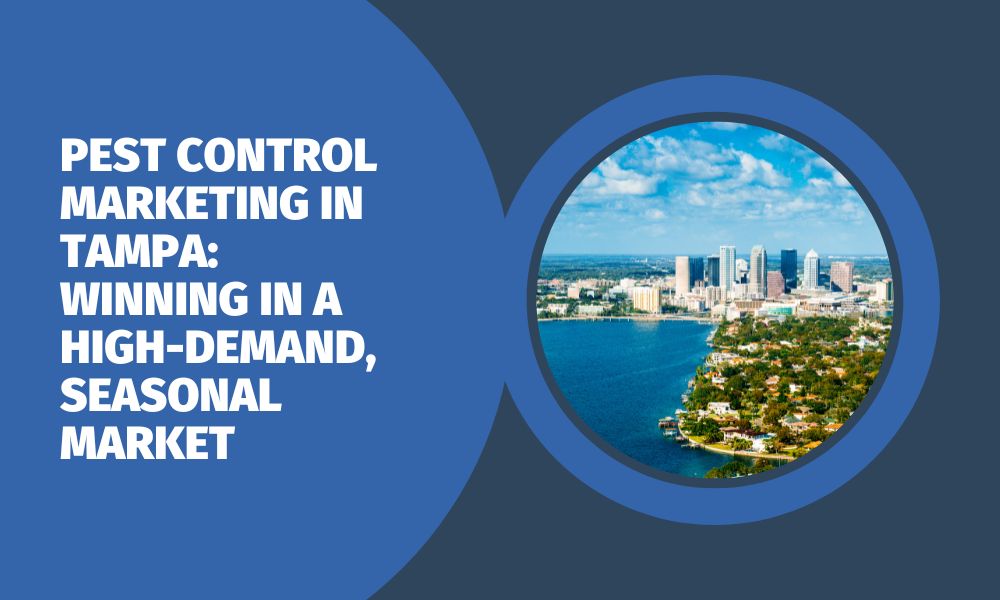
In Tampa, Demand Isn’t the Problem—Timing and Execution Are Tampa is one of the most active pest control markets in the country, but not because of rapid population growth or extreme competition alone. The environment itself drives demand. Heat, humidity, and frequent rainfall create ideal conditions for pests to thrive year-round, with noticeable spikes throughout the warmer months. Mosquitoes, ants, roaches, and other pests are not occasional issues—they are ongoing concerns for homeowners. Because of that, most pest control companies in Tampa do not struggle to generate interest. The challenge is converting that demand into consistent, predictable revenue. Some companies experience strong bursts of leads during peak months, followed by slower periods where momentum drops. Others generate steady interest but fail to fully capitalize on it due to gaps in follow-up, messaging, or service structure. In this market, success is not about creating demand. It’s about capturing it at the right time and building systems that turn it into long-term customers. Seasonality in Tampa Is an Opportunity—If You Use It Correctly Unlike markets where demand drops off significantly, Tampa maintains a strong baseline of pest activity. However, certain services spike dramatically depending on the time of year. Mosquito control is one of the clearest examples. As temperatures rise and rainfall increases, outdoor activity becomes less enjoyable, and homeowners begin actively searching for solutions. The same pattern applies to other pests influenced by moisture and heat. Many companies recognize these spikes, but not all of them prepare for them effectively. Marketing often reacts to demand instead of anticipating it. Campaigns are launched after homeowners are already experiencing issues, rather than positioning the company ahead of the surge. The companies that perform best take a more proactive approach. They build campaigns and messaging around what is about to happen, not just what is happening now. They understand when homeowners start thinking about mosquito control, outdoor comfort, and family safety—and they align their marketing with that timeline. When done correctly, seasonality becomes one of the strongest advantages in this market. How Homeowner Behavior Shapes Marketing in Tampa Another factor that makes Tampa unique is how homeowners approach pest control decisions. This is a highly residential, family-driven market. Many homeowners are thinking not just about eliminating pests but about protecting their home environment for their family, pets, and outdoor spaces. That mindset influences how marketing should be positioned. Messaging that focuses only on eliminating pests can feel transactional. Messaging that connects pest control to comfort, safety, and usability of the home tends to resonate more strongly. For example, mosquito control is not just about reducing insects. It’s about being able to use the backyard again, letting kids play outside, or hosting without discomfort. Companies that understand this shift in perspective tend to connect more effectively with their audience. The Growing Role of AI and Search in Local Visibility Like other competitive markets, Tampa is seeing changes in how homeowners search for pest control services. Google’s AI-driven overviews and platforms like ChatGPT are beginning to influence how people research problems and evaluate providers. Instead of simply clicking through multiple websites, users are often presented with summarized answers and recommendations. This has two important implications. In a market like Tampa, where competition is already strong, this becomes another way to differentiate. Where Most Pest Control Companies Leave Revenue on the Table Even with strong demand, many companies in Tampa are not maximizing the opportunities available to them. One of the most common issues is focusing too heavily on new lead generation while underutilizing the existing customer base. In a market where pest control is often recurring, the real value comes from long-term relationships, not one-time services. Without consistent communication, many of these opportunities are missed. Another issue is inconsistency in follow-up. Leads come in during peak periods, but without systems in place, response times slow down and opportunities are lost. This becomes more noticeable as volume increases. Conversion also plays a role. In a competitive market, homeowners are comparing options quickly. If the website or landing page does not clearly communicate value or make the next step easy, they move on. These gaps are not always obvious, but they have a direct impact on growth. What Actually Works in Tampa The companies that perform well in Tampa tend to align their marketing with how the market behaves, rather than relying on a one-size-fits-all approach. They plan around seasonality instead of reacting to it. Campaigns are built in advance of peak periods, allowing them to capture demand early and more efficiently. They structure their services around recurring revenue. Instead of focusing only on one-time treatments, they position their offerings in a way that encourages ongoing relationships with customers. They also invest in communication. Email and SMS are used to stay in front of customers, promote seasonal services, and create additional touchpoints throughout the year. A few key elements consistently show up in companies that are growing in this market: Local SEO and content support this by building long-term visibility. Pages and articles that target specific services and local concerns help capture traffic over time, especially when aligned with how homeowners search. Growth in Tampa Comes From Consistency In a market like Tampa, growth is not about short bursts of performance. It comes from consistency. When campaigns are aligned with seasonal demand, messaging connects with homeowners, and follow-up systems are in place, results begin to stabilize. Lead flow becomes more predictable, and revenue becomes easier to scale. Companies that rely on reactive marketing often experience highs and lows. Companies that build structured systems tend to grow more steadily over time. What It Takes to Win in Tampa Tampa will continue to be a high-demand market but also a competitive one. The companies that succeed will be the ones that understand how to align their marketing with the environment, the seasonality, and the way homeowners make decisions. That means planning ahead instead of reacting, focusing on long-term customer value, and ensuring that every opportunity is handled effectively. When
Pest Control Marketing in Las Vegas: What It Takes to Compete in a Fast-Moving Market
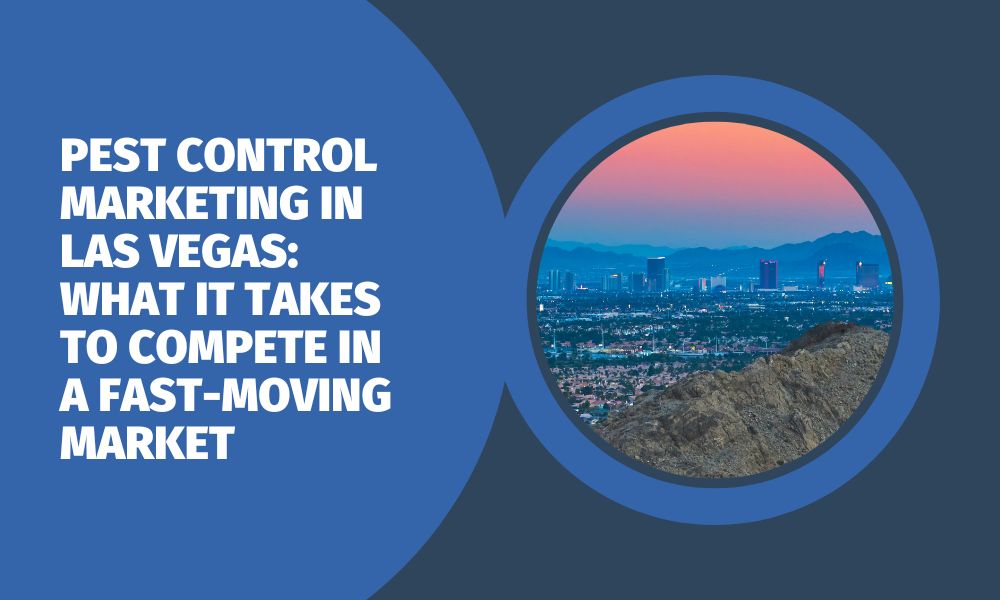
Marketing in Las Vegas Has Changed—And It’s Not Slowing Down Las Vegas has always been a competitive market for pest control, but the pace of change over the last few years has accelerated in a way that many companies are still trying to catch up with. Homeowners are searching differently. They’re consuming content differently. And they’re making decisions faster than they used to. What worked even two or three years ago—basic SEO, occasional ads, and a simple website—is no longer enough to stand out consistently. The companies that are growing today are the ones that have adapted to how marketing actually works now, not how it used to work. That shift is happening across several areas at once: search, content, and how leads are handled after they come in. SEO Is Evolving—But It’s Still One of the Most Important Channels There’s been a lot of conversation around whether SEO is still worth investing in, especially with the rise of AI-driven search results. The reality is that SEO is not going away—it’s evolving. Search engines are no longer just listing websites. They’re interpreting information, summarizing it, and presenting it in new ways. Google’s AI overviews and tools like ChatGPT are now part of how homeowners research pest issues and evaluate their options. In a market like Las Vegas, where competition is already high, this adds another layer to how visibility works. Companies that rely on outdated SEO strategies—thin content, generic service pages, or keyword-stuffed blogs—are seeing diminishing returns. At the same time, companies that build deeper, more useful content are gaining visibility not just in traditional rankings but also within AI-generated results as well. To stay competitive, SEO needs to be approached differently: SEO is still one of the most valuable long-term channels available, but only when it reflects how search actually works today. The Rise of Video and Short-Form Content Another major shift in marketing is how homeowners consume information. People are not just reading anymore. They are watching. Short-form video—especially reels—has become one of the most effective ways to build visibility, trust, and familiarity with your brand. In a service business like pest control, this matters more than most companies realize. Homeowners want to feel comfortable with who they are hiring. Video gives them a way to see your team, hear your voice, and understand how you approach your work before ever picking up the phone. In markets like Las Vegas, where there are many options to choose from, that familiarity can influence decisions. The companies that are leaning into video are not necessarily producing high-end content. In many cases, the most effective videos are simple and consistent. They answer common questions, show real scenarios, and provide quick insights into pest issues homeowners deal with regularly. What matters is consistency and relevance, not production quality. Over time, this type of content builds recognition. When someone sees your company again—whether in search results or ads—they are more likely to trust it. Lead Management Is Where Most Revenue Is Lost Generating leads is only part of the equation. What happens after a lead comes in often has a bigger impact on growth than the marketing itself. This is one of the biggest gaps we see across pest control companies. Calls are missed. Form submissions sit without a response. Follow-up is inconsistent. Opportunities that were paid for are lost simply because there is no structured system in place to handle them. In a market like Las Vegas, where homeowners often reach out to multiple companies at once, response time becomes a major factor. The company that responds first and responds well has a significant advantage. This is where automation plays a critical role. Instead of relying entirely on manual processes, companies that implement structured systems for lead management are able to respond quickly and consistently. This includes: These systems do not replace the human element—they support it. They ensure that no lead is missed and that every opportunity is handled with consistency. For many companies, improving this part of the process alone leads to a noticeable increase in conversions. Why the Companies That Win Are More Aligned, Not More Active One of the biggest misconceptions in marketing is that growth comes from doing more. More ads. More posts. More tools. In reality, the companies that perform best in competitive markets like Las Vegas are not necessarily doing more—they are more aligned. Their SEO supports their ads. Their content builds trust before a lead ever comes in. Their systems ensure that every opportunity is handled properly. Their messaging reflects how homeowners actually think and search. Everything works together. When that alignment is in place, results become more predictable. Lead flow stabilizes, conversion improves, and growth becomes easier to manage. Without that alignment, even strong individual efforts tend to underperform. Competing in Las Vegas Moving Forward Las Vegas will continue to be a fast-moving and competitive market. Search will continue to evolve. Video will continue to play a larger role. Customer expectations around speed and communication will continue to increase. The companies that stay ahead will be the ones that adapt to these changes early and build systems that support them. That means treating SEO as an evolving strategy, not a one-time effort. It means investing in content that builds familiarity and trust. And it means ensuring that every lead is handled quickly and consistently. This is not about chasing trends. It’s about recognizing how the market is shifting and adjusting accordingly. Request a Breakdown of Your Current Marketing If you’re operating in the Las Vegas area and want to understand how your marketing is performing, we can break it down for you. We’ll look at your current visibility, how your leads are being handled, where opportunities are being missed, and what a more aligned approach would look like based on your goals. From there, you’ll have a clear path to improving performance and building a more predictable system for growth.
Pest Control Marketing in Phoenix: Why Year-Round Demand Changes Everything
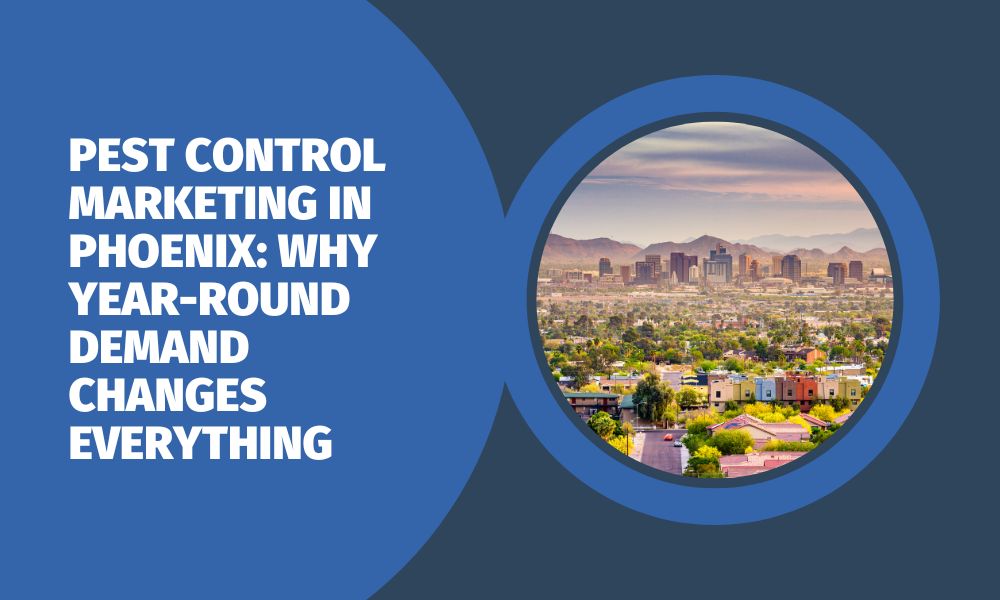
Phoenix Isn’t a Seasonal Market—and That Changes How Marketing Works In most parts of the country, pest control follows a fairly predictable cycle. Activity increases in the spring, peaks during the summer, and then slows down as temperatures drop. Marketing strategies are often built around that rhythm, with companies ramping up spend during peak months and pulling back in the off-season. Phoenix does not follow that pattern. Pest activity in this market is consistent throughout the year. Homeowners deal with ongoing pressure from scorpions, ants, spiders, and other pests that do not simply disappear for months at a time. While there are still periods of increased activity, the baseline level of demand remains steady. At first glance, that seems like an advantage. A longer season should create more opportunity. However, it also means that competition never really slows down. Other companies are not pulling back their marketing efforts, and visibility remains contested across every major channel year-round. As a result, marketing in Phoenix requires a different level of consistency and precision. It is not enough to rely on seasonal spikes. The companies that grow are the ones that can maintain performance over time, not just during peak periods. Urgency Plays a Bigger Role in This Market Another defining characteristic of Phoenix is how quickly homeowners move when they encounter a pest issue. In many cases, pest control is not a long research process. When someone finds a scorpion in their home or notices an active problem, the priority is to get it handled as quickly as possible. That compresses the decision-making window and changes how marketing performs. Instead of slowly comparing multiple companies, many homeowners are looking for a solution they can trust immediately. The business that stands out in that moment often has a significant advantage, even over competitors with similar services or pricing. This has a direct impact on what matters most in your marketing. Visibility still plays a role, but it is only the first step. What happens after someone lands on your page—or calls your business—becomes just as important. Companies that perform well in Phoenix tend to make it easy for customers to act quickly. Their messaging is clear, their value is easy to understand, and the next step is obvious. Just as importantly, they respond quickly once a lead comes in. In a market driven by urgency, delays in response often mean lost opportunities. Why Strong Demand Doesn’t Always Lead to Strong Results Because Phoenix has consistent demand, many companies assume that generating leads should be relatively straightforward. In reality, that demand attracts more competition, which raises the standard for what actually works. One of the most common issues is over-reliance on traffic. Companies invest in Google Ads or Local Service Ads, expecting that increased visibility will automatically translate into more business. While those channels can drive traffic, they do not guarantee results on their own. Another common problem is a lack of alignment between messaging and intent. Pest control in Phoenix often involves specific concerns, particularly around scorpions. When marketing speaks too broadly or fails to address the problem directly, it becomes less effective. Homeowners are looking for solutions to a specific issue, not a general overview of services. Conversion is also a major factor. In a competitive market where homeowners have multiple options, small differences in how a website communicates trust, clarity, and next steps can significantly impact performance. If the experience feels unclear or requires too much effort, users will move on quickly. Speed to lead is equally important. Because many homeowners are reaching out to multiple companies at once, the first response often shapes the entire interaction. Without systems in place to ensure fast and consistent follow-up, even strong campaigns can underperform. The Growing Role of AI in How Customers Find Pest Control Search behavior is also evolving, and Phoenix is the type of market where these changes tend to show up quickly. AI-driven search results, including Google’s AI overviews and tools like ChatGPT, are becoming part of how homeowners research pest issues and evaluate providers. Instead of simply scrolling through a list of websites, users are increasingly seeing summarized answers and recommendations at the top of their search experience. In a market with heavy competition, this has real implications. If your company or your content is included in those summaries, you gain visibility before a user ever clicks through to a website. If not, you are relying entirely on traditional rankings, which are becoming more competitive over time. To show up in these AI-driven results, content needs to be more intentional. It should answer real questions clearly, reflect actual experience, and be structured in a way that is easy to interpret. Generic or surface-level content is less likely to be surfaced. This shift is already influencing how customers discover pest control companies, and it will continue to play a larger role moving forward. What High-Performing Companies Do Differently The companies that consistently perform well in Phoenix tend to approach marketing with a higher level of focus and alignment. They understand that demand alone is not enough and that performance comes from how well each part of the system works together. Their messaging is tailored to how homeowners actually think in this market. Instead of broad service descriptions, they address specific problems directly, which makes their marketing feel more relevant and actionable. They also invest in conversion, not just visibility. Their landing pages are designed to guide users clearly, reduce hesitation, and make it easy to take the next step. This includes strong, straightforward messaging and a user experience that works well on mobile, where a large portion of traffic comes from. Response time is another area where top-performing companies separate themselves. They have systems in place to ensure that leads are handled quickly and consistently, which has a direct impact on close rates. In addition, they make use of their existing customer base. With year-round demand, there are ongoing opportunities to provide additional services and maintain consistent communication. Companies
Pest Control Marketing in Dallas–Fort Worth: How to Stand Out in One of the Most Competitive Markets
In Dallas–Fort Worth, More Marketing Doesn’t Equal More Growth Most pest control companies in the DFW area are not struggling because they aren’t marketing. They’re struggling because their marketing isn’t structured to scale. This is one of the most competitive pest control markets in the country. Nearly every company is running some combination of Google Ads, Local Service Ads, SEO, and social media. On the surface, it looks like everyone is doing the right things. But when you look closer, the results tell a different story. Lead flow is inconsistent. Some months perform well, others fall off. Sales don’t always match lead volume. Increasing budget doesn’t always lead to better outcomes. In a market like Dallas–Fort Worth, doing more is not what creates growth. Executing better is. Why Dallas–Fort Worth Is a Different Kind of Market DFW is not a single market—it’s a collection of micro-markets spread across a massive metro area. Dallas, Fort Worth, Plano, Frisco, McKinney, Arlington, and surrounding suburbs all behave differently from both a competition and customer standpoint. That scale changes how marketing needs to be approached. Companies that try to treat DFW as one unified service area often struggle with efficiency. Budget gets spread too thin, visibility becomes inconsistent, and campaigns fail to gain traction in the areas that matter most. At the same time, competition is intense. National brands, large regional operators, and well-established local companies are all actively investing in digital marketing. This drives up competition across every major channel and makes average execution ineffective. The service mix adds another layer of complexity. General pest control is highly competitive, but so are higher-value services like mosquito control, termite treatments, and rodent exclusion. Each of these services behaves differently from a marketing perspective, yet many companies approach them the same way. Seasonality is also different in DFW. The warmer climate extends pest activity for longer periods of the year. Demand doesn’t drop off as sharply, but competition remains elevated for longer stretches as well. All of this creates a market where broad, unfocused marketing tends to stall out quickly. The Impact of AI Search and Changing Visibility In a market as competitive as Dallas–Fort Worth, visibility is no longer limited to traditional search rankings. AI-driven search results are becoming a larger part of how homeowners find and evaluate pest control companies. Google’s AI overviews and tools like ChatGPT are now influencing decisions before users ever click on a website. This shift is especially important in a market like DFW, where homeowners have no shortage of options. When multiple companies are competing for the same search, the ones that show up in AI-generated summaries gain an early advantage. That changes how content needs to be created. Instead of relying on generic service pages or surface-level blog content, companies need to build content that clearly answers real questions and demonstrates actual expertise. AI systems tend to prioritize content that is structured well, specific, and grounded in experience. To compete in this environment, content should focus on: In a crowded market, this becomes another layer of differentiation. Where Most Pest Control Companies in DFW Lose Momentum Even well-run companies tend to plateau in this market, and the reasons are consistent. One of the most common issues is trying to cover too many service areas at once. Because DFW is so large, it’s easy to expand targeting too quickly. This dilutes the budget and reduces effectiveness, especially in high-competition areas. Another issue is treating all services the same. General pest control, mosquito services, termite work, and rodent control each require different messaging and timing. When everything is grouped together, campaigns become less relevant and less effective. Conversion is another major gap. In a market where homeowners have multiple options, small differences in messaging, layout, and clarity can determine whether a lead is generated or lost. Many companies underestimate how much impact this has. Speed to lead also becomes more difficult as volume increases. Without systems in place, leads are missed or responded to too slowly, which directly affects close rates. And finally, many companies focus heavily on acquiring new customers while overlooking opportunities within their existing base. In a market this competitive, long-term growth depends on both. What Actually Works in Dallas–Fort Worth The companies that grow consistently in DFW tend to approach marketing with more focus and structure. Instead of trying to capture the entire metro at once, they prioritize specific service areas and build campaigns around them. This allows for stronger visibility, better control over performance, and more efficient use of budget. They also separate services instead of combining them. This makes messaging more relevant and aligns campaigns with how homeowners actually search for solutions. From a conversion standpoint, the difference is in how clearly the value is communicated. High-performing campaigns are supported by landing pages that are built specifically for the services and locations being targeted. What consistently shows up in campaigns that perform well: Once leads come in, structure becomes critical. Companies that implement systems for immediate response, organized follow-up, and pipeline tracking convert more of the opportunities they generate. Beyond acquisition, growth becomes more stable when the customer base is actively used. In DFW, where competition for new leads is high, generating additional revenue from existing customers is often one of the most effective ways to grow. Local SEO supports this when it’s built intentionally. That means creating pages and content around specific cities and services within the metro, rather than relying on broad, generalized content. A More Realistic View of Growth in DFW Growth in Dallas–Fort Worth is rarely the result of a single change. It comes from improving how the entire system works together. When targeting becomes more focused, conversion improves, and follow-up becomes consistent, results begin to stabilize. Lead flow becomes more predictable, and sales begin to align more closely with marketing efforts. In many cases, companies don’t need more traffic. They need to get more out of the traffic they already have. What It Takes to Win in
Pest Control Marketing in Nashville: What Actually Works in 2026
Most Pest Control Companies in Nashville Don’t Have a Lead Problem—They Have a Structure Problem If you’re running a pest control company in the Nashville area, you’ve likely invested in marketing already—Google Ads, Local Service Ads, SEO, maybe even social media. And yet growth still feels inconsistent. Some months are strong. Others fall off. Leads come in, but revenue doesn’t scale the way it should. It can feel like you’re doing the right things, just without predictable results. In most cases, the issue isn’t visibility or budget. It’s structure. In a market like Nashville—where competition is increasing, neighborhoods are expanding rapidly, and pest activity shifts heavily with the seasons—marketing only works when every part of the system is aligned. Traffic alone doesn’t grow a business. What matters is how that traffic is converted, handled, and turned into long-term revenue. This is where most companies fall short, and it’s also where the biggest opportunities exist. Why Nashville Is a Different Kind of Market Nashville is not a simple market from a marketing standpoint. It has a combination of factors that make both lead generation and conversion more complex than in most cities. First, the growth. Areas like Franklin, Spring Hill, Murfreesboro, and Mt. Juliet continue to expand quickly, bringing in new homeowners every day. That creates constant opportunity, but it also increases competition, especially in high-demand neighborhoods. Second, the housing mix. Nashville has a wide range of home types—from older properties with ongoing rodent and termite issues to new builds dealing with ants, spiders, and early infestations. This creates year-round demand, but with clear seasonal spikes layered on top. Those seasonal shifts matter more than most companies account for: Marketing that doesn’t adjust to those patterns becomes inefficient very quickly. At the same time, the digital landscape has become more competitive. More pest control companies are investing in Google Ads, Local Service Ads are more saturated, and ranking organically requires more than just publishing a few blog posts. All of this makes Nashville a market where average marketing approaches tend to stall out. The Impact of AI Search and Google’s New Overviews Another major shift that’s already affecting pest control marketing—especially in competitive markets like Nashville—is the rise of AI-driven search results. Google is now showing AI-generated overviews at the top of many searches, and platforms like ChatGPT are increasingly being used by homeowners to research pest problems, compare providers, and make decisions before ever visiting a website. This changes how visibility works. In the past, ranking on page one of Google was the primary goal. Now, companies also need to position themselves as trusted sources that AI systems pull from and summarize. That requires a different approach to content and website structure. Instead of relying on thin pages or generic blog posts, companies need to build content that clearly answers real homeowner questions and reflects actual experience in the field. AI-driven results tend to favor content that is specific, well-structured, and genuinely helpful. We’re already seeing this shift take place in markets like Nashville. Companies with stronger, more intentional content are gaining visibility not just in traditional rankings but within AI-generated results as well—often before a user ever clicks through to a website. To compete in this environment, your content needs to do more than exist. It needs to be useful, direct, and aligned with how people actually search. That includes: This is not a future trend—it’s already influencing how customers find and choose pest control companies. Where Most Pest Control Companies Lose Momentum The challenges are rarely random. Most companies hit the same ceiling for similar reasons. One of the most common issues is relying too heavily on a single channel—usually Local Service Ads. While LSAs can generate leads, they don’t provide consistency or control. Lead flow fluctuates, competition increases, and growth becomes reactive instead of intentional. Another major issue is weak conversion. Many pest control websites are built to look acceptable, but not to perform. They lack a strong offer, don’t create urgency, and don’t clearly guide the homeowner toward taking action. In a competitive market, that gap becomes expensive. Speed to lead is another critical factor. Homeowners in Nashville often reach out to multiple companies at once. The company that responds first—especially within minutes—has a significant advantage. Without systems in place to respond immediately, opportunities are lost before a conversation even begins. And finally, most companies underutilize their existing customer base. This is often the most overlooked growth lever. Without consistent communication, opportunities for additional services, seasonal treatments, and reactivation campaigns are missed entirely. What Actually Works in Nashville The companies that grow consistently in this market are not doing one thing better. They are doing several things together in a structured way. It starts with a balanced lead generation approach. Instead of relying on a single channel, strong performers typically combine multiple sources to create more consistent inbound demand. From there, conversion becomes the priority. Traffic is only valuable if it turns into calls and booked services. High-performing companies focus heavily on how their landing pages and websites guide users toward action. What we consistently see working includes: Once a lead comes in, response time becomes the next differentiator. Companies that implement systems to respond immediately—through call handling, SMS, and structured follow-up—consistently outperform those that rely on manual processes. Beyond that, real growth starts to compound when the database is used correctly. Instead of constantly chasing new leads, successful companies generate additional revenue from customers they already have. Seasonal campaigns, service reminders, and targeted follow-ups create a more stable and predictable business. Finally, local SEO plays a supporting role, but only when it’s done strategically. This means building out location-based service pages and content that aligns with how homeowners actually search, rather than relying on generic blog content. A More Realistic View of Growth When these pieces are aligned, growth becomes more predictable. It’s not just about increasing lead volume. It’s about creating consistency—where leads are coming in steadily, conversion rates improve, and fewer opportunities
Top 10 Reasons Pest Control Companies Work With Rhino Pest Control Marketing
The pest control industry is different from almost every other service business. You’re dealing with seasonality, recurring revenue models, high competition, emergency calls, missed-call risk, technician scheduling, and customers who want immediate answers. Most marketing agencies simply don’t understand that world. Rhino Pest Control Marketing was built specifically for it. We don’t “also do pest control marketing.” Pest control is our niche. It’s what we live in every day. That focus is why pest control companies across the country choose to partner with Rhino instead of a generalist agency. Here are the top 10 reasons why. 1. We Only Work With Pest Control Companies Rhino isn’t a jack-of-all-trades marketing agency. We don’t bounce between dentists, restaurants, e-commerce brands, and pest control. Everything we build is designed for exterminators, wildlife companies, and home service operators. That means: There’s no learning curve. No experimentation on your dime. Just proven systems. 2. We Understand How Pest Control Companies Actually Make Money Not all leads are created equal. A one-time ant treatment is not the same as an annual protection plan or a termite contract. Rhino markets with revenue in mind, not just lead volume. We understand: That means we help you attract customers that build your business, not just inflate your call volume. 3. We Build Systems, Not Just Campaigns Anyone can run ads. Anyone can build a landing page. Rhino builds full marketing ecosystems: You’re not just buying marketing. You’re building infrastructure for growth. 4. We Reduce Missed Calls and Lost Leads Missed calls are one of the biggest profit leaks in pest control. Rhino is obsessive about speed to lead and follow-up. We specialize in: Getting more leads is useless if they aren’t handled correctly. We fix the leaks. 5. We Know GoHighLevel at an Expert Level Most agencies “use” GoHighLevel. Rhino builds inside it. We create: We turn GHL into your operational command center. 6. We Create Local SEO Content That Actually Ranks Generic blogs don’t dominate markets. Rhino builds content that establishes authority at the city and service level. That includes: Our SEO strategy is designed for long-term domination, not short-term traffic spikes. 7. We Focus on Sustainable Growth, Not Short-Term Gimmicks No cheap tricks. No marketing stunts that burn out. Everything Rhino builds is meant to compound: We help you build an asset, not just run a campaign. 8. We Work Directly With Your Sales Team to Increase Conversions Most marketing agencies stop once a lead comes in. Rhino doesn’t. We care just as much about what happens after the phone rings. We work directly with your sales team to improve: Small changes in call handling and response time can drastically increase your close rate without spending another dollar on advertising. We analyze: Then we tighten your process so more leads turn into booked jobs and long-term customers. Rhino doesn’t just create demand. We help you convert it. 9. We Operate Like a True Partner, Not a Vendor Our clients don’t feel like account numbers. Rhino is intentionally boutique so we can stay involved and invested in your success. We build: Most of our clients stay because they trust the process and see consistent growth. 10. We Care About ROI, Not Vanity Metrics Traffic doesn’t pay bills. Impressions don’t pay bills. Revenue does. Everything we do is tied to: We measure success by business growth, not marketing buzzwords. Built By People Who Live in the Pest Control Industry Rhino Pest Control Marketing wasn’t created by marketers guessing what works. It was built by people who understand pest control operations, sales processes, and long-term business growth. We know what it takes to: That’s why pest control companies don’t just hire Rhino. They stay with Rhino.
How to Choose a Pest Control Marketing Agency Without Being Misled by Vanity Metrics
Choosing a pest control marketing agency has become harder than ever. Nearly every agency claims to be a “growth partner,” almost all of them promise more leads, and many showcase charts filled with numbers that look impressive at first glance — but don’t actually mean anything for your business. If you’ve ever sat through a sales call where an agency bragged about impressions, click-through rates, or website visitors, you’ve already experienced the world of vanity metrics. These numbers sound good, but they rarely translate into booked jobs, recurring revenue, or long-term company growth. The truth is, most agencies are extremely good at presenting data that makes them look successful, even when the actual results are mediocre. Why Vanity Metrics Are So Misleading The biggest challenge pest control owners face is that vanity metrics feel reassuring. When an agency tells you that your ads got “200,000 impressions” or that your website traffic went up 30%, it sounds like progress. But impressions don’t put trucks on routes, and website traffic doesn’t pay your technicians or grow your customer base. Many agencies rely on these metrics because they’re easy to inflate, easy to sell, and easy to hide behind. What they don’t show you is how many of those impressions turned into calls, how many of those calls turned into customers, and whether any of it resulted in actual revenue. If the numbers don’t connect to profit, they don’t matter. The Right Agency Focuses on Revenue, Not “Good-Looking” Charts This is where choosing the right pest control marketing agency becomes less about the promises they make and more about the questions you ask and the results they can prove. A good agency will talk openly about lead quality, conversion rates, retention metrics, customer lifetime value, and cost per acquisition. They’ll explain the full pipeline — from the moment someone clicks your ad to the moment your technician closes the job — and they’ll understand how operations and marketing work together. A generic agency, on the other hand, will avoid these details because they don’t track them, don’t understand them, or don’t want to be held accountable for them. Specialized Knowledge Matters More Than Fancy Reporting Another sign of a strong agency is whether they understand seasonality, local search intent, and the difference between generating leads and generating high-quality opportunities. Pest control isn’t a one-size-fits-all service, and it shouldn’t be treated like one. If an agency shows you identical campaigns they’ve used in multiple markets, or they can’t clearly explain how your strategy changes from spring to fall, that’s a red flag. A real pest control marketing partner won’t recycle templates or cookie-cutter ads. They’ll tailor your campaigns to your service area, your competitive landscape, your pricing, your route capacity, and your goals. And they’ll be able to tell you why certain tactics work in your specific region — not just in pest control generally. A Good Agency Understands That Marketing Alone Can’t Fix Everything A trustworthy agency will also be upfront about the fact that marketing alone doesn’t fix everything. They’ll discuss your follow-up process, your CRM setup, your speed to lead, your scheduling capacity, and your customer experience. They’ll want to know what happens after a lead comes in, because the truth is that no marketing system can overcome slow response times or inconsistent follow-up. The best agencies help you improve your internal processes because they care about results, not just advertising. When an agency avoids conversations about your operations or refuses to look at your CRM, it usually means they’re only focused on generating leads — not helping you turn them into revenue. SEO Should Be a Strategy, Not a Buzzword It also matters how an agency talks about SEO. Many agencies sell “pest control SEO” like it’s a simple package — some keywords here, a few blog posts there, maybe a handful of backlinks. But real SEO for pest control goes far deeper. It involves service pages built to convert, city-specific content for local visibility, consistent Google Business Profile optimization, and educational content that builds trust. If an agency can’t explain how their SEO strategy improves your rankings, your conversions, and your customer acquisition cost, then they’re not offering SEO — they’re offering busywork disguised as strategy. Look for a Partner Who Treats Your Business Like a System Ultimately, choosing the right pest control marketing agency comes down to finding a partner who understands that your business is an ecosystem. A great agency will talk about revenue, not impressions. They’ll talk about booked jobs, not clicks. They’ll talk about customer lifetime value, not social media likes. They’ll show you the numbers that matter — how many leads came in, how many converted, how much they cost, and how much profit they created. And most importantly, they’ll be transparent when something isn’t working and proactive in fixing it. The Bottom Line: Demand Numbers That Tie Back to Revenue If you want to avoid being misled by vanity metrics, look for an agency that is willing to connect every statistic back to growth and profitability. The right partner will help you understand your data, simplify your decisions, and build a marketing system that scales sustainably. Anything less is just noise — and noise doesn’t build a pest control business.
Why Your Pest Control Website Has Traffic But No Calls: A Conversion Audit Guide
Many pest control companies are surprised when they discover that their websites attract consistent traffic but generate very few calls or form submissions. On the surface, traffic appears to be a sign that your marketing efforts are working. However, traffic alone is not enough. The real indicator of success is whether your website can convert visitors into customers. When homeowners reach your site but fail to take action, it signals a disconnect between what they are expecting and what your website is delivering. A weak conversion rate is rarely the result of a single issue. It usually stems from a combination of design, clarity, mobile experience, trust-building, and user-behavior factors. This guide breaks down the most common reasons pest control websites fail to convert — and how you can audit your own site to identify the barriers preventing visitors from becoming booked appointments. Your Above-the-Fold Experience Isn’t Communicating What You Do Quickly Enough A visitor should be able to understand who you are, what you offer, and how to contact you within seconds of landing on your website. The area at the top of your homepage — known as the above-the-fold section — is your most valuable real estate. When this area is unclear, crowded, or overly generic, potential customers lose confidence and leave before exploring further. For pest control companies, clarity matters because most visitors arrive with a problem they want solved quickly. If they see vague messaging, stock images that don’t relate to your services, or headlines that don’t clearly state your value, they assume they’re in the wrong place. A high-performing above-the-fold section includes a concise service statement, a strong call to action, a direct way to contact you, and trust elements like ratings or certifications. If these elements are missing or buried, visitors fail to engage. Your Website Was Designed for Desktop — But Your Customers Are Mobile The majority of pest control searches come from mobile devices, often in urgent situations. However, many websites still prioritize desktop design, resulting in poor mobile usability. When buttons are too small, content loads slowly, or important actions require excessive scrolling, mobile visitors abandon the site quickly. Mobile optimization goes beyond responsive design. It requires intentional layout choices that prioritize thumb-friendly buttons, click-to-call functionality, fast loading images, and simplified navigation. If scheduling an appointment or requesting service feels cumbersome on a mobile device, visitors move on to competitors with smoother experiences. A strong mobile-first approach supports immediate action, which is critical in emergency-driven industries like pest control. Your Calls-to-Action Are Not Direct, Visible, or Persuasive Even when a website is informative, visitors won’t convert if the call-to-action (CTA) is weak or hard to find. Many pest control sites rely on vague language such as “Learn More” or “Contact Us,” which fails to motivate a decision that already feels urgent to the customer. Effective CTAs are direct, prominent, and repeated throughout the site. Phrases like “Call Now for Immediate Service,” “Get Your Quote Today,” or “Schedule Your Inspection” set clear expectations and give the user a defined next step. These CTAs should appear in the header, at the top of the homepage, within each service section, and at the bottom of every page. When CTAs are sparse or inconsistently placed, visitors default to leaving rather than taking action. Your Content Doesn’t Match User Intent or Service-Specific Needs One of the most common reasons for low conversions is a mismatch between what the visitor is looking for and what your website provides. If someone searches for termite treatment or rodent removal, they expect to find a page that speaks directly to that service — not a generic homepage or a brief paragraph lumped into a long list of offerings. Service-specific pages improve both SEO and conversions because they reinforce that you understand the problem the visitor is facing. These pages should explain the signs of the issue, your treatment process, why your company is qualified, and what the customer should expect next. When content is too broad or does not address the specific concern that brought the visitor to your site, trust erodes and conversions decline. Your Website Fails to Establish Trust Early in the Visit The pest control industry depends heavily on trust. Homeowners want to feel confident that the company they hire is licensed, experienced, and reputable. If your website does not quickly communicate reliability, visitors hesitate to call — even if they need service urgently. Trust can be built through visible customer reviews, service guarantees, photos of technicians or branded vehicles, proof of licensing or certifications, and transparent explanations of your processes. When websites rely on overly generic photos, thin content, or outdated information, they fail to reassure visitors. Many sites lose conversions simply because they do not display enough social proof to give visitors the confidence to engage. Your Forms Are Not Optimized for Quick, Low-Friction Submission A long or complicated form can dramatically reduce submissions. Pest control customers are often seeking fast help, so the booking or estimate request process must be easy. Forms that ask for too much information, require multiple steps, or load slowly create unnecessary friction — and visitors abandon the process. High-converting forms keep fields minimal and prioritize the information needed to initiate contact. They should also be accessible from multiple points on the site, not hidden on a single page. When a form is hard to locate or feels like a commitment, visitors revert to searching for another company with a simpler process. Your Service Area Isn’t Clear, Causing Visitors to Hesitate Many potential customers leave websites because they aren’t sure whether the company serves their location. A lack of detailed service area information—especially in larger metro regions—creates uncertainty that prevents visitors from taking action. Service area pages help eliminate this friction by clearly listing cities, neighborhoods, or counties you cover. These pages also strengthen SEO by giving search engines specific location markers to index. When a visitor immediately sees that you service their exact area, they are far more